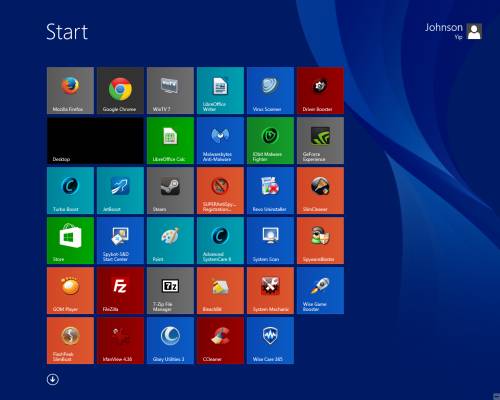
Windows 8.1/8 and 10 is now available on a lot of slower tablets, mini desktops, micro-computers, and laptops/netbooks with 1-2 GB of RAM, and a slower CPU which uses Intel Celeron, and Atom chips. These slower computers, laptops, and desktops usually run on “Windows 8.1 with Bing” which is Windows 8.1 32 Bit with Bing set to the default search engine in Internet Explorer, and Windows 8.1 search. Windows 8.1 with Bing usually come with cheaper $99-199 smaller 8-9 inch Windows 8.1 tablets, $99-299 desktops, and $199-399 11-12 inch laptops/netbooks.
If you upgraded to Windows 10, I recommend that you read my Complete Guide on Making Windows 10 Faster on Older, and Slower Computers which has a lot of beginners to more advance power user tips on making Windows 10 faster, and more reliable. There are a lot of tips which are exclusive to Windows 10 like disabling taskbar and Action center window’s transparency and visual effects, turning off anonymous user tracking features found in Windows 10, disabling Cortana voice assistant, Disabling New Services like Xbox, and removing pre-install Windows Store Apps to make Windows 10 run faster. Windows 10 is a decent operating system for older computers with 1GB of RAM, and a slower Dual-Core CPU which is common in a lot of older and cheaper tablets, laptops, netbooks, and desktops. Windows 10 also now has a startmenu, and startbutton, so it feels more like Windows 7. Windows 10 is a free upgrade in Windows Update for the first year it is released if you own a Windows 8.1 or 7 PC or laptop.
A lot of my tips on improving Windows 8.1 performance should work on Windows 10, and other versions of Windows like Windows 7, Vista, and XP because there are similar features like MSConfig, services.msc, and Task Manager in other versions of Windows. There is also a startmenu in Windows 10 which makes using it a lot easier.
It is very simple to make Windows run faster on slower computers, laptops, and tablets. Decreasing the RAM, and CPU usage would also help you save battery life, and use less power on your PC. Your computer will also be less likely to freeze, and crash if it is running faster.
After performing all these tweaks below, my computer usually use 500MB of RAM, under 10% CPU resources, and less disk reading and writing after staring up my computer, and logging into Windows 8.1.
My desktop computer also starts up faster, and runs faster, and more smoothly with fewer crashes and freeze.
Login to Windows 8.1 with an Administrator Account if you are using a non-Administrator account
You would need to be login as an administrator to do a lot of these Tweaks, and settings changes to make Windows faster. A lot of these tweaks also work on Windows XP, Vista, and 7, and they will improve the performance of faster computers, tablets, and laptops as well as slower computers. Some of these tips may work on the future version of Windows which will is called Windows 10.
Use USB Flash drive or SD card as a Readyboost drive for faster file read speeds
Windows 8.1 supports Readyboost which let you use a USB flash drive, or SD Card as extra memory. All you need to do is insert a faster USB 2.0-3.0 flash drive, or SD card into your computer, and Windows will show a pop-up Windows which shows you an option at the bottom of the Window to ask you if you want to use ReadyBoost to speed up your computer. You can also right-click on your SD card, or USB flash drive, and click on Properties. You can also click on the Ready Boost tab to turn it on and off, and customize the settings like the amount of storage space for Ready Boost in its Readyboost properties page.
Switch to a Faster Lightweight Antivirus
The first thing you can do is switch to a faster running anti-virus program like 360 Total Security which runs pretty quickly even on slower computers. It also has a speed up section which scans your computer for un-needed autostart programs which can slow down your computer. There is a disk cleanup program in 360 Total Security for removing junk on your drives. You can also switch the protection mode in Total Security to Performance for faster speeds. There are also Cloud Based Antivirus like Immunet Cloud Antiviris which uses the internet to protect your computer, but you always need to be connected to the internet to be protected. Cloud based antivirus usually use less RAM, and CPU resources than traditional antivirus programs with offline protection because most of the virus protection is online-based. I recommend scanning for virus, spyware, and malware with your antivirus, antispyware, and antimalware program to keep your PC from not slowing down because of virus, spyware, and malware programs infecting your PC. Also, make sure you are using the latest version of your antivirus, antispyware, antimalware, and firewalls definitions, and programs, so you are protected from the newest viruses in real-time. The Windows Firewall should be good enough, and it runs pretty quickly, so you can use it as your main firewall software in Windows.
Once you install a third-party antivirus, you can disable Windows Defender, so it is not running in the background. You can open Windows Defender by searching it in the Start Screen’s All Apps menu by clicking the arrow button at the bottom left, or swiping your finger up in the Start Screen. Once Defender has launched, go to settings tab, and click on Administrator, and uncheck the “Turn on Defender” check box. You next need to launch services.msc by clicking the Windows Key +R on your keyboard, ans typing in services.msc in the text box, and clicking ok. Look for “Windows Defender Service” and right-click it to click on Properties to set it to disable. You also need to disable “Defender Network Inspection service” in services.msc to disable Windows Defender.
Use a Startup manager program to disable unwanted startup programs from using up your RAM annd CPU resources
You can also disable services and startup programs with programs like Startup Booster by Anvisoft which helps you pick the startup programs and services which are safe to disable without disconnecting you from the internet, or making your computer unstable.
You can also use your mouse to right-click on the taskbar at the bottom of Windows, and pick Task Manager, and click on the startup tab to disable startup programs by right clicking them, and clicking disable on your mouse. Don’t disable startup programs which are used for your antivirus, firewall, and other software because it could make your computer insecure. You may need to click on the More Details button on the bottom left of Task Manager Window to show all the tabs in Task Manager.
You can also disable Services by going to the Services tab in Task Manager, and clicking on the Open Services link at the bottom left of the Task Manager Screen. A lot of the services are safe to disable, or set to manual. I recommend setting the services to manual to be on the safe side, so if you need them to run, they will run manually when a program is launched which needs the service. You can also use Windows’ Msconfig program by holding the Windows Key + R button on your keyboard, and typing in msconfig to launch it to disable services, disable UAC pop-up messages, and change startup settings in Windows. But, msconfig is not as easy to use as services.msc in my experience.
Disable less important Services in Services.MSC
I just use Windows for browsing the web on a web browser, gaming, office work, listening to music and watching video, so I disable a lot of non-essential services instead of keeping them set to automatic except for services I need to have running for the internet to work, to keep Windows running safely, and keep Windows running reliably.
[continue reading…]